

Shop Factory New Ammo: Fresh, Reliable Rounds You Can Trust
Factory new ammo isn’t just fresh off the line—it’s engineered to a tolerance that handloads rarely match, delivering consistent velocity and pressure shot after shot. Each round is assembled with virgin brass, pristine primers, and precisely metered powder, so you get predictable accuracy and reliable ignition every time you 7.62x54R Ammo for Sale squeeze the trigger. Pop a box into your magazine, chamber a round, and trust that the next pull will land exactly where the last one did—no fiddling, no guesswork, just pure performance.
What Exactly Makes a Cartridge Factory New?
A cartridge is factory new the moment it leaves the manufacturer’s line, but what truly defines that state is the absence of any prior firing cycle. The brass case has never been resized, the primer pocket has never been reamed, and the neck has never been work-hardened by chamber pressure. Factory new ammo means the propellant charge was metered by machine to a precise grain weight, the bullet was seated with a consistent crimp, and the case was annealed to a specific softness for optimal obturation. The critical detail is the primer is seated flush and anvil-intact, ensuring uniform ignition on the first strike. You’re not shooting a reload that’s been fire-formed to someone else’s chamber; you’re working with virgin brass that will expand exactly to your firearm’s dimensions on that very first pull of the trigger, giving you true baseline velocity and point-of-impact data.
Understanding the Difference Between Fresh Production and Remanufactured Rounds
Fresh production ammo starts with virgin brass, new primers, and pristine powder, assembled from scratch for absolute consistency. Remanufactured rounds, by contrast, are rebuilt from once-fired cases that are inspected, resized, and reloaded with new components—saving money but introducing variables from unknown prior use. The core distinction: factory new ammo guarantees untouched components, while remanufactured rounds carry a history you can’t fully verify. Fresh brass expands uniformly, giving predictable pressure and accuracy; reprocessed cases may have weakened necks 7.62×39 Ammo for Sale or subtle stress fractures after multiple firings. For defensive or precision work, fresh production wins. For range plinking, remanufactured saves cash. Q: Can remanufactured rounds be as reliable as fresh? A: Often yes, from reputable loaders, but they lack the zero-defect uniformity of virgin factory production—so test batches before trusting them fully.
Key Quality Indicators You Can Spot on the Box or Casing
When checking if ammo is truly factory new, the box and casing give away a lot. Look for a primer sealant—a colored ring around the primer—which is a solid sign of fresh, moisture-proof manufacturing. Also, spot a shiny, unblemished case mouth and a clean, recessed headstamp with sharp lettering. Any tarnish, heavy scratches, or uneven crimp on the bullet means it’s likely handled or reloaded. On the box, check for a lot number and a production date code; these confirm traceability. A tight, intact factory seal and crisp labeling are your visual cues of genuine new production, not surplus or remanufactured rounds.

| Indicator | Factory New Sign | Warning Sign |
|---|---|---|
| Case mouth | Bright, uniform, no dents | Dark ring or flared edge |
| Primer pocket | Sealant visible, flush primer | Recessed or loose primer |
| Headstamp | Sharp, deep, symmetrical | Faded or double-struck letters |
Why Freshly Made Ammunition Delivers More Consistent Accuracy
Freshly made ammunition delivers more consistent accuracy because every component—from the brass casing to the propellant charge—is manufactured to exacting tolerances in a single production run. Unlike aged stock that may have been exposed to temperature swings or moisture, factory new ammo benefits from pristine primers and uniformly burn-rate powder, which translates to stable chamber pressures on every shot. This 5.7x28mm Ammo for Sale uniformity directly affects bullet seating depth and neck tension, giving your rifle or pistol the same “launch” conditions each time. For precision shooters, the result is tighter shot groups and fewer velocity deviations. In short, freshly manufactured rounds eliminate the variables of long-term storage, ensuring that the ballistic performance you expect on the box is exactly what happens downrange, round after round.
How Uniform Powder Charges and Primer Seating Tighten Your Shot Groups
When you buy factory new ammo, the uniform powder charges and primer seating are what shrink your groups at the range. Each cartridge gets an identical propellant weight, so bullet velocity stays consistent shot after shot—no fliers from over- or under-charged rounds. 7.62×51 Ammo for Sale Primer seating is pressed to a precise depth, ensuring the flame front ignites the powder the same way every time. That consistency translates to a tight, repeatable point of impact. Even a slight variation in primer depth can shift your zero by an inch at 100 yards. You get predictable vertical spread, which is easier to compensate for than random horizontal drift.
- Uniform Ammo Cans & Storage for Sale powder weight eliminates velocity swings that cause bullet drop differences.
- Consistent primer seating promotes even ignition timing across all rounds.
- This reduces group fliers, letting you focus on your hold instead of ammo quirks.
- Factory precision here beats hand-measured batches for pure repetition.
The Role of Virgin Brass in Preventing Chambering and Extraction Issues
Virgin brass in factory new ammo is annealed to precise specifications, ensuring the case mouth and shoulder possess the optimal spring-back memory for flawless chambering. Unlike once-fired brass, which work-hardens and develops microscopic stress fractures, virgin brass maintains uniform dimensions straight from the draw die—preventing the sticky bolt lift and tight chamber fits caused by deformed rims or bulged case walls. This dimensional fidelity directly eliminates extraction failures, as the case head remains perfectly squared to the extractor groove. Because there is zero prior fire-forming distortion, the cartridge seats fully into battery on the first attempt, reducing carbon fouling and pressure spikes. For reloaders, that means a fresh case’s elasticity guarantees a snug yet release-ready grip on the chamber wall after ignition, avoiding torn rims and stuck cases.
- Tight, consistent headspace allows the extractor to grip without slipping.
- Uniform wall thickness prevents case adhesion to the .17 WSM Ammo for Sale chamber.
- Resilient annealed neck tension releases the bullet without crushing the case body.
Ultimately, chambering and extraction reliability is inseparable from the metallurgical purity of virgin brass—the reason factory-loaded rounds cycle flawlessly in competition and defense firearms alike.

How to Pick the Right Fresh Load for Your Firearm’s Barrel Twist and Purpose
Matching factory new ammo to your barrel’s twist rate and intended use starts with bullet weight and length. A slower twist (1:12) stabilizes lighter, shorter projectiles, while faster twists (1:7–1:8) are built for heavy, long-for-accuracy bullets. Select a factory load whose bullet weight falls within your twist’s documented range; if you’re shooting varmints at close range, a light, frangible round from a factory box works, but for precision at distance, choose a heavier, high-BC bullet that your twist can fully stabilize. Check the box for stated velocity and pressure—factory ammo is consistent, but a supersonic load that stays stable in your barrel’s rifling matters more than raw speed. For hunting, pick a bullet designed to expand at your barrel’s practical velocity window; for target, pick a match-grade factory round that groups well.
Always confirm your rifle’s twist rate stamped on the barrel, then buy a factory load with a bullet length-to-weight ratio that that twist is proven to handle.

Matching Bullet Weight and Velocity to Your Gun’s Optimal Performance Window
Finding the optimal performance window for your rifle means pairing bullet weight with the velocity your barrel’s twist rate actually stabilizes. A 1:7 twist prefers heavier 77–85 grain bullets, which hold velocity better at long range, while a 1:12 twist shines with lighter 55–62 grain loads that reach higher initial speeds without tumbling. Test factory ammo across weight steps—shoot three loads per weight and track group sizes plus velocity consistency. The sweet spot appears where your muzzle velocity stays within 50 fps of the manufacturer’s claim and groups tighten under 1 MOA. Heavier bullets need more spin; lighter bullets need less, but too fast a twist can over-stabilize and reduce accuracy.
Match bullet weight to your twist rate, then verify factory velocity consistency; the optimal performance window is where stabilization and speed align for tight groups.
Selecting Between Full Metal Jacket, Hollow Point, or Soft Point for Your Needs
Choosing between FMJ, hollow point, and soft point starts with your barrel twist and target. For paper punching or cheap practice, full metal jacket loads offer reliable feeding and minimal fouling, though they lack expansion. If your twist rate stabilizes heavier bullets for hunting or self-defense, hollow points expand reliably but may fail to cycle in some short-action rifles. Soft points suit tubular magazines and medium game, expanding at lower velocities without over-penetrating. *Match the bullet’s construction to the twist’s optimal weight range and the intended tissue density, 5.56 Ammo for Sale not just the caliber’s reputation.* Test each type at your range to verify accuracy and function before stocking up.
Selecting between FMJ, hollow point, or soft point hinges on whether your twist stabilizes the bullet weight and whether your target demands penetration or expansion.

Best Practices for Storing Brand-New Rounds to Preserve Their Lifespan
For factory-new rounds, the primary lifespan risk is moisture and temperature cycling, not the ammunition itself. Store them in their original, sealed factory packaging inside a rigid, airtight ammo can with a desiccant pack. Maintain a stable, cool environment below 75°F with low humidity, as fluctuations cause condensation that corrodes brass and degrades primers. Keep the .17 HMR Ammo for Sale can off concrete floors and away from direct sunlight.
Rotate your stock annually, not because new rounds “go bad,” but to verify the factory seal remains intact and the desiccant stays active.
Avoid oiling the rounds themselves—factory-applied lacquer and sealants are sufficient. Only open the factory box when you intend to load, as each exposure introduces moisture. If your storage area is humid, double-bag the unopened boxes in Mylar with an oxygen absorber before sealing in the can, and label the date of opening. This preserves ballistic consistency and ignition reliability for decades.
Controlling Temperature and Humidity to Keep Propellants Stable
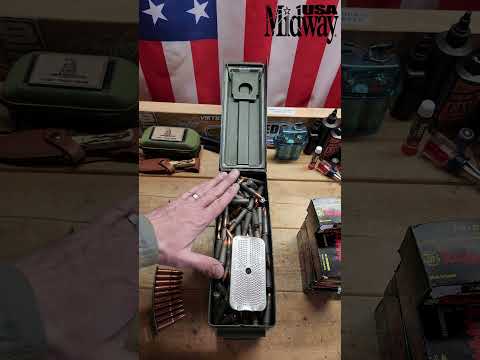
For factory-new ammunition, the primary environmental threat to propellant stability is excessive heat, which accelerates chemical breakdown and raises chamber pressure. Conversely, high humidity promotes corrosion of the brass case and primer, compromising the seal and allowing moisture to reach the powder. Therefore, store rounds in a climate-controlled space, maintaining a **stable temperature range of 55–70°F** and a relative humidity between 30% and 50%. Avoid attics, garages, or vehicle trunks, where daily swings are severe. A sealed ammo can with a desiccant pack, checked monthly, offers a reliable microclimate. Even with new rounds, these measures slow propellant degradation, ensuring consistent ignition and velocity for decades.
Temperature stability and controlled humidity are the twin pillars of preserving propellant integrity, preventing both thermal degradation and moisture-induced corrosion in factory-new ammunition.
Rotating Your Stock to Ensure You Always Shoot the Freshest Supply First
Treat your ammunition like a perishable commodity by implementing a strict first-in, first-out rotation system. When you purchase factory-new rounds, physically place them behind your existing supply on the shelf or in the ammo can, ensuring older boxes are always pulled first. This simple habit prevents the frustrating scenario of shooting a decade-old batch while your newest acquisition waits, unopened, in the back. **Rotating your stock diligently** guarantees you are constantly cycling through your inventory, meaning every round you fire is the freshest possible iteration of its manufacturing run. By making this your standard operating procedure, you eliminate the risk of any cartridge languishing for years in storage, thereby maximizing the long-term reliability and consistent performance of every single round you own.
Common Misconceptions About Fresh Ammunition—What You Can Safely Ignore
Many shooters wrongly believe factory new ammo needs to be “broken in” or specially conditioned before it performs reliably, but this is a misconception you can safely ignore. Fresh ammunition is manufactured to exacting tolerances, so it does not require cleaning, polishing, or warming up to function correctly. Another common myth is that new cartridges are dangerously “hot” or over-pressured from the factory, yet **factory new ammo** is consistently loaded to safe, spec-compliant levels. You can also ignore the fear that fresh rounds will cause excessive fouling or wear—modern propellants and primers are designed to burn cleanly. Finally, there is no need to rotate or “season” new ammunition; it is ready for immediate use straight from the box. Trust the product, and disregard these **common misconceptions about fresh ammunition** without hesitation.
Does Newer Always Mean Hotter or More Powerful?
Assuming a newly manufactured cartridge is inherently hotter than an older batch is a mistake. Factory new ammo is loaded to published pressure specifications, not to maximum velocity for its own sake. A fresh production run often uses the same powder charge and bullet weight as a lot made years prior, meaning ballistic output remains consistent. What changes is lot-to-lot variance, which can slightly alter velocity in either direction, not a deliberate power increase. Newer ammunition does not automatically deliver higher pressure; in fact, manufacturers may reduce charges to ensure reliability across different firearm tolerances. Your chronograph, not the manufacturing date, tells you whether a round is truly more powerful.
Why Some Factory Rounds Are Dirtier Than Others and How to Handle It
Not all factory rounds burn equally clean, and the culprit is often the powder type and primer compound used, not negligence. Some manufacturers load ball powders or hard primer formulations that leave more carbon and fouling behind, especially in short-barreled pistols where incomplete combustion occurs. This is why one box of factory ammo can smoke you out while another stays spotless. Instead of treating powder residue from factory loads as a defect, simply adjust your cleaning schedule—run a few bore snakes or solvent-soaked patches after a heavy range session, and watch for carbon ring buildup near the throat, which you can scrape out with a brass pick. The dirt is cosmetic and ballistic, not a sign of weak or dangerous ammunition, so ignore the hype and shoot it.
- Test different brands to find a cleaner-burning propellant for your specific barrel length.
- Use a copper solvent on the bolt face or cylinder to break up stubborn primer residue.
- Keep rounds dry—moisture that isn’t sealing the case can exaggerate fouling.
Getting the Most Value from Your Unfired Purchase
To get the most value from your factory new ammo purchase, treat it as a precision investment from the moment the box is sealed. **Strict lot-number consistency** is your main asset; buy multiple boxes from the same production run to ensure identical ballistics and point of impact. Store it in a cool, dry environment to preserve primer sensitivity and powder burn rates, ensuring every round performs as tested. Rotate your stock, shooting the oldest first, to avoid aging components underperforming.
The true value of unfired factory ammo emerges in predictable, specialty sports & supply repeatable accuracy—so zero your optics with one lot and never mix batches.
Finally, resist the urge to “save” premium defensive loads for years; cycle them through practice to verify reliability, replacing them fresh to keep your carry ammo—and your confidence—at peak performance.
Bulk Buying Versus Single Boxes—When Each Makes Sense for Your Shooting Routine
For a consistent shooting routine, bulk buying factory new ammo wins when you train weekly with the same caliber and load, as it locks in a lower per-round cost and ensures identical lot numbers for uniform accuracy. Single boxes make sense when you are testing different factory loads to find your firearm’s preferred grain weight or when your sessions are sporadic and you want to avoid tying up cash in ammo that might not cycle reliably. If you compete or practice drills, bulk lots save time on reordering; if you only shoot quarterly, one box prevents powder degradation from long storage. Rotational purchasing—buying one box to verify function, then committing to a case—balances risk and savings.
- Bulk buy only after confirming zero malfunctions with a single test box.
- Single boxes suit mixed-caliber shooters who rotate between multiple firearms.
- Bulk buy for match practice where consistent recoil and point of impact are non-negotiable.
- Choose single boxes when traveling by air, as shipping and weight costs can erase bulk savings.
How to Test Different Brands Side-by-Side to Find Your Gun’s Favorite Load
To identify your firearm’s most accurate factory load, set up a single, stable rest and shoot at a consistent distance, ideally 50 or 100 yards. Begin by firing a five-shot group with Brand A, then allow the barrel to cool completely before switching to Brand B—this prevents heat-induced flyers from skewing results. Record each group’s diameter and point of impact shift on a simple target log, noting the exact lot number since factory ammo varies between batches. For a rigorous comparison, follow this sequence: benchmark your baseline group with a known standard load, then rotate through each candidate brand twice, alternating order to cancel shooter fatigue. Finally, compare average group sizes, not single best 7mm PRC Ammo for Sale groups, because consistency across multiple sessions reveals true reliability. Prioritize the brand that delivers both tight clustering and repeatable zero, not just one lucky shot.
